
Automated lead nurturing workflows generate 320% more revenue than manual outreach campaigns, and yet most small businesses still rely on ad-hoc follow-ups, inconsistent email sequences, and guesswork to move prospects through the pipeline. If you want to maximize your ROI with automated lead nurturing workflows, the difference between businesses that scale and businesses that stall comes down to one thing: a structured system that works while you sleep.
Key Takeaways
| Question | Answer |
|---|---|
| What is an automated lead nurturing workflow? | A pre-built sequence of automated touchpoints (emails, texts, tasks) that guide a lead from first contact to conversion without manual intervention. |
| How do automated workflows improve ROI? | They eliminate response delays, reduce manual labor, and keep leads engaged consistently, producing more conversions from the same lead volume. |
| Is automation right for a small business? | Yes. Small businesses benefit most from automation because it replaces the capacity that a large sales team would otherwise provide, enabling scaleable growth without increased headcount. |
| What framework supports automated lead nurturing? | The Phoenix Ascent Framework provides a staged approach to automation, from digital launch through to a full growth partner engagement. |
| When should I introduce a growth partner? | Once your foundational systems are in place and you are generating consistent leads, a growth partner helps you optimize, scale, and remove bottlenecks through advanced automation. |
| How long before I see ROI from lead nurturing automation? | 76% of businesses achieve a positive ROI within the first year. Structured frameworks can accelerate this significantly. |
| What does it cost to set up automated workflows? | Entry-level setups start at $1,500 for a digital launch with lead capture. Full infrastructure builds run $3,500 to $8,000, with ongoing optimization from $1,500 per month. |
What Are Automated Lead Nurturing Workflows (and Why Your ROI Depends on Them)?
An automated lead nurturing workflow is a connected sequence of messages, tasks, and triggers that engage your prospects automatically based on their behavior and stage in your funnel.
Instead of relying on a salesperson to remember to follow up, or a spreadsheet to track where each lead is, automation handles timing, personalization, and consistency at scale. The result is a system that responds faster, follows up more consistently, and qualifies leads more effectively than any manual process could.
For a small business, this is not a luxury. It is the mechanism that allows a team of two to compete with a company of twenty.

The three outcomes that directly affect your return on investment are: speed to lead (how fast you respond), nurture consistency (how reliably you follow up), and conversion rate (how many leads you actually close). Automated workflows improve all three simultaneously.
Best for: Small Businesses That Want Scaleable Growth Without Scaling Headcount
This guide is built for small business owners who are generating leads but not converting them at the rate their effort deserves.
Automated lead nurturing workflows are best suited to:
- Service-based businesses where the sales cycle spans days or weeks and consistent follow-up is critical
- Owner-operated businesses where the owner cannot personally respond to every inquiry within minutes
- Businesses with a CRM or email platform in place but no structured follow-up system connecting them
- Companies preparing for scaleable growth who need systems that perform at higher lead volumes without breaking
- Businesses that have tried manual outreach and find it inconsistent, time-consuming, or ineffective at scale
If you are a small business owner spending hours each week chasing leads manually, automated nurturing workflows are the single highest-leverage investment you can make to maximize ROI.
Did You Know?
78% of customers buy from the first company that responds to their inquiry. Automated speed-to-lead workflows ensure you are always that first responder, 100% of the time.
How to Maximize Your ROI with Automated Lead Nurturing Workflows: The Core Components
Not all automation delivers the same result. High-ROI automated lead nurturing workflows share five components that work together as a system.
1. Immediate Lead Capture and Response
The moment a prospect fills in a form, clicks an ad, or sends an inquiry, the clock starts. Leads are 100x more likely to qualify if contacted within five minutes versus thirty minutes. Your workflow must trigger an immediate, personalized response the second a lead enters your system.
2. Behavioral Segmentation
Generic sequences underperform. Your workflow should track what each lead does (pages visited, links clicked, forms submitted) and adjust messaging accordingly. Brands deploying AI-driven personalization and behavioral segmentation achieve an average ROI of $78 per $1 spent, compared to far lower returns from blanket broadcasts.
3. Multi-Channel Follow-Up Sequences
Email remains the highest-ROI channel available, with an average return of $53 for every $1 spent in 2026. But combining email with SMS, retargeting, and task-based reminders creates a nurture sequence that reaches leads across the channels they actually use.
4. CRM Integration
Your workflow is only as effective as the data feeding it. A properly integrated CRM ensures every touchpoint is logged, every lead stage is tracked, and no prospect falls through the gap between your marketing and sales activities.
5. Clear Conversion Triggers
Every workflow needs a defined moment when it asks the lead to take action: book a call, request a quote, claim an offer. Without a clear trigger, even well-nurtured leads stall. Your workflow should escalate to a direct conversion ask once a lead reaches a qualifying score or behavior threshold.
The Phoenix Ascent Framework: A Structured Path to Maximize Your ROI with Automated Lead Nurturing Workflows
Building automated lead nurturing workflows in isolation rarely produces consistent ROI. What produces results is a structured approach where your website, lead capture, CRM, workflows, and strategy all connect into a single operating system for your business.
The Phoenix Ascent Framework provides exactly that. It is a four-stage progression designed to meet a small business where it currently sits and move it toward scaleable growth through structured implementation.
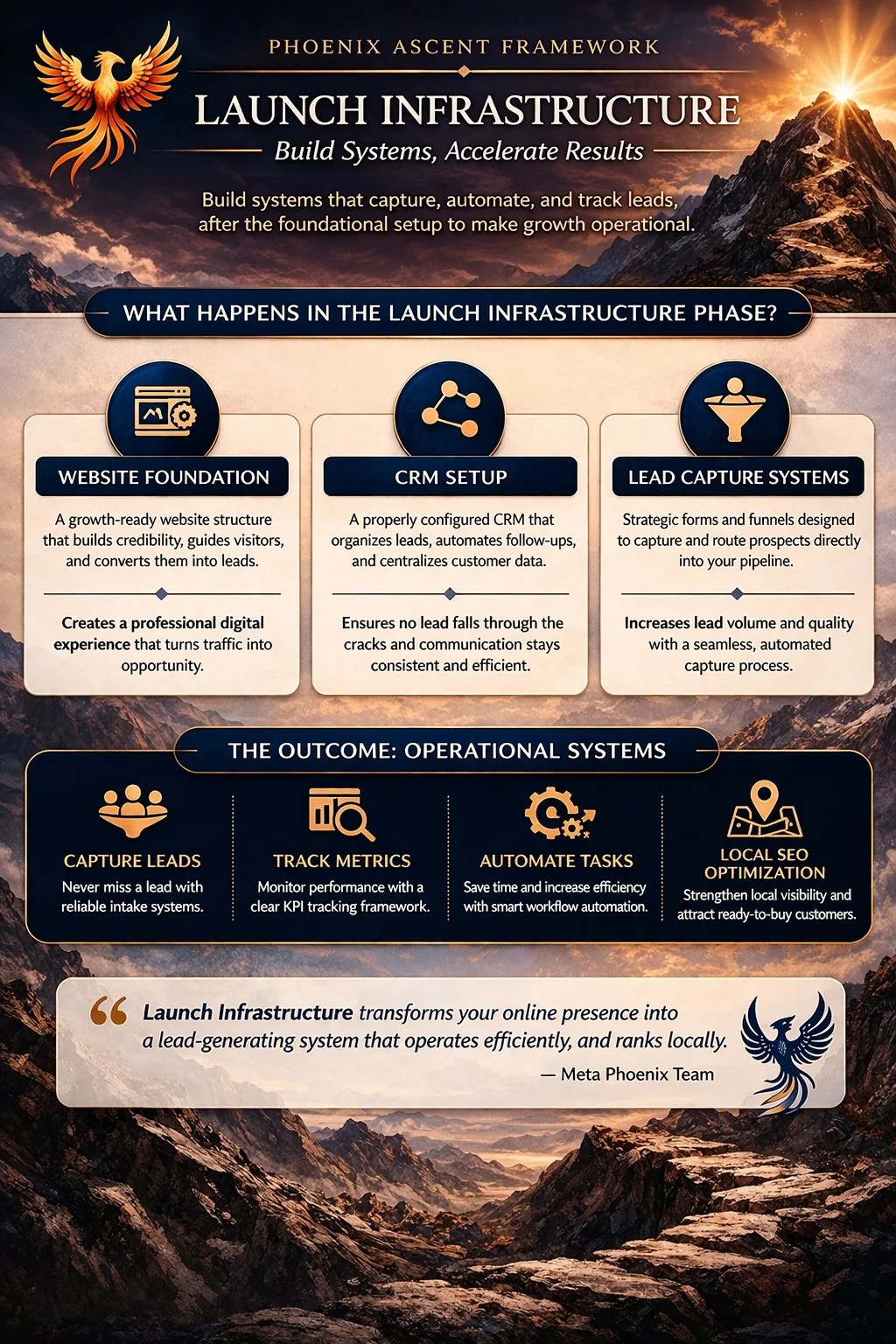
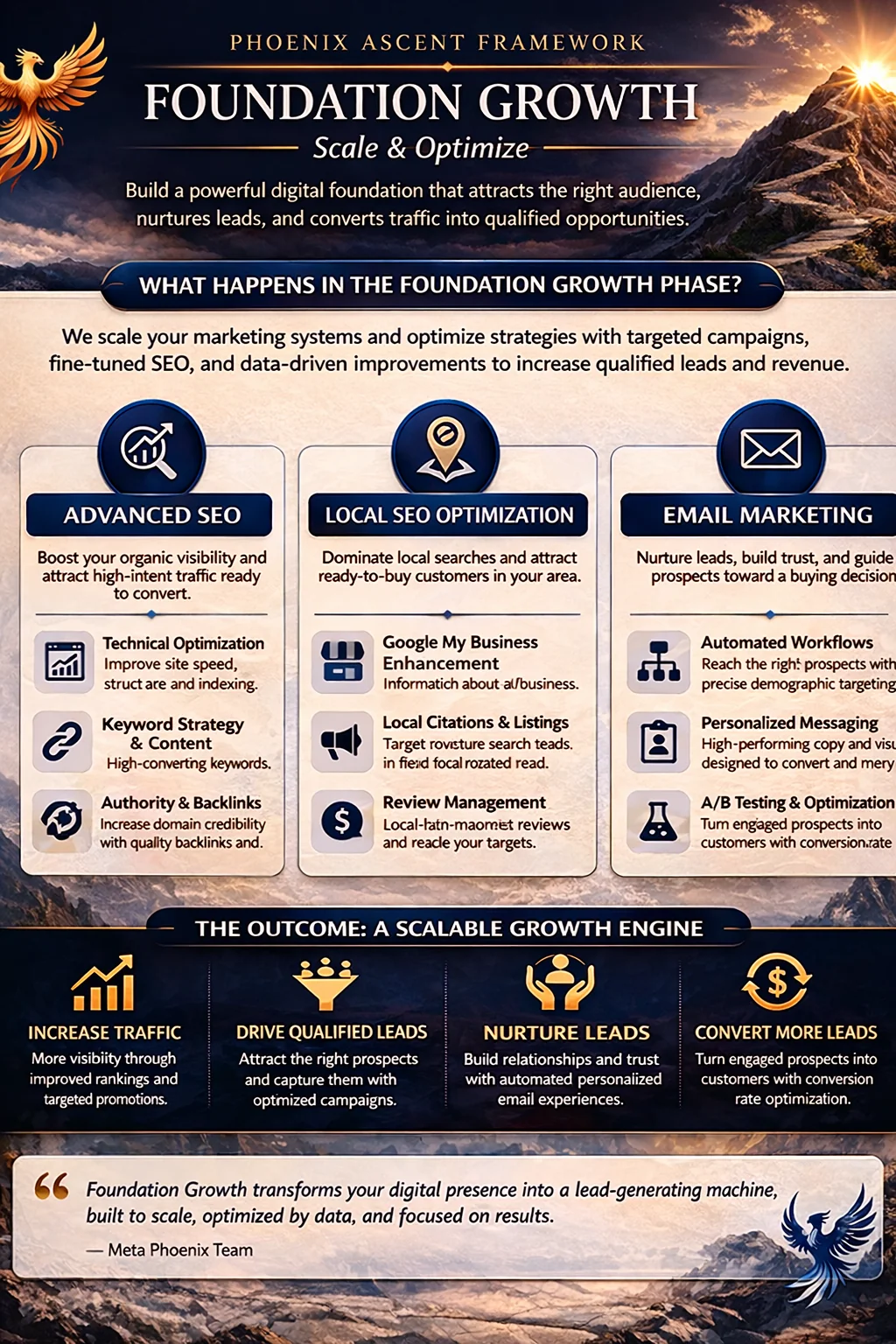
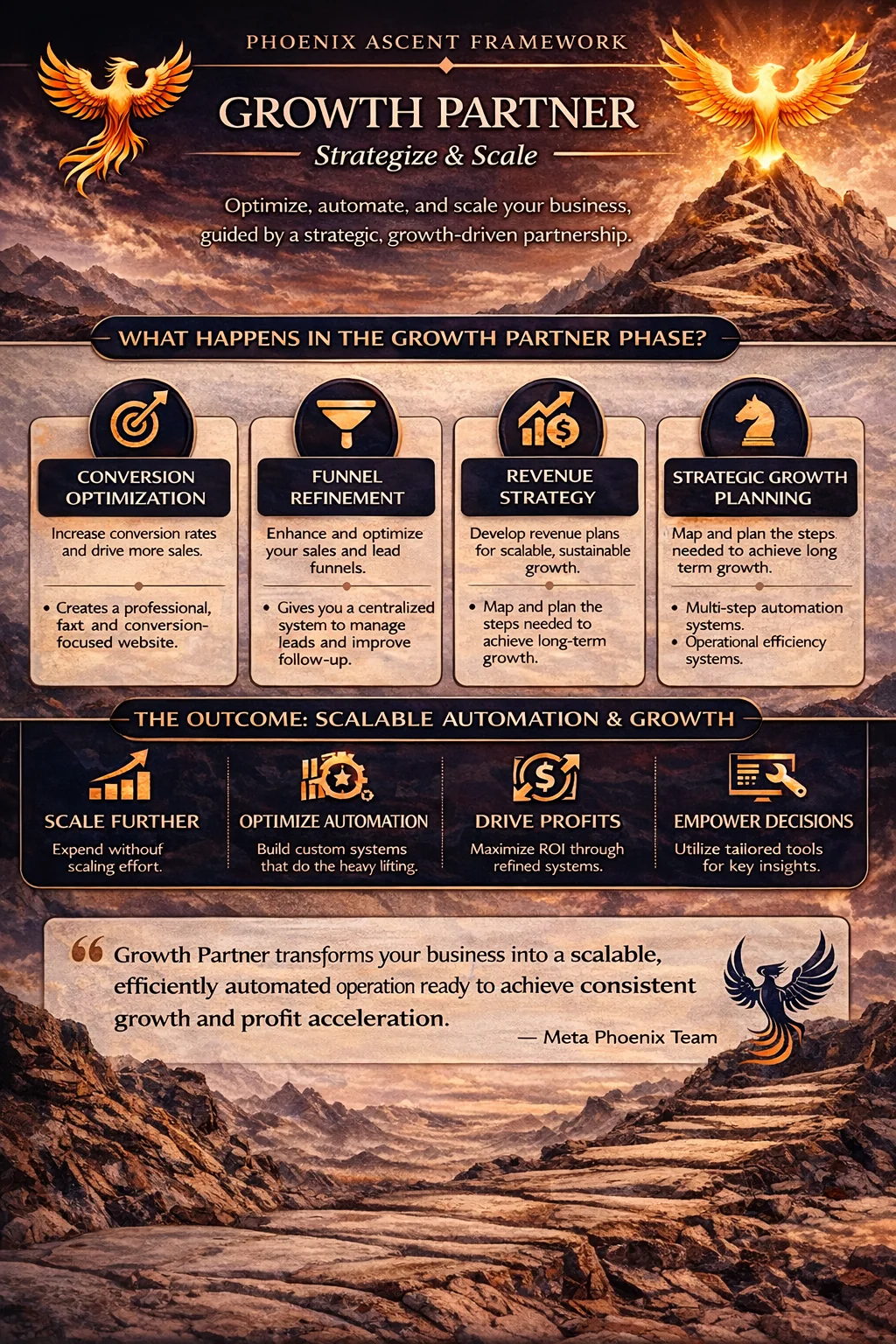
Each stage builds on the previous one, so your automated workflows are never bolted on as an afterthought. They are woven into the infrastructure from the moment your digital presence goes live.
“This is not a list of services. It is a structured progression designed to meet you where you are and move your business forward.” — Phoenix Ascent Framework
Best Automated Lead Nurturing Workflows by Business Stage
The workflows that maximize ROI at Stage 1 look very different from the workflows that drive revenue at Stage 4. Here is how automated lead nurturing evolves through the Phoenix Ascent Framework.
Stage 1: Digital Launch (Best for New Businesses Getting Online)
Digital Launch gives your business a professional digital presence with lead capture built in from day one. At this stage, your core workflow is a simple, well-timed email sequence that acknowledges every lead immediately and begins the nurturing process.
This stage includes a mobile-optimized website, lead capture forms, and base automation setup. Without this foundation, no advanced workflow can function effectively.
- Investment: $1,500 (Build With You) or $2,500 to $3,000 (Build For You)
- Best for: Businesses that are not yet online, or whose current site has no lead capture
- Workflow complexity: Simple immediate-response sequence with 3 to 5 follow-up touchpoints
Stage 2: Launch Infrastructure (Best for Businesses Ready to Connect Their Systems)
Launch Infrastructure moves your business from presence to performance. This is where CRM integration, segmented workflows, and a measurable feedback loop are built into your operations.
Most builds complete in 3 to 6 weeks. The result is a business where every lead is captured, routed, tagged, and automatically followed up based on behavior, not guesswork.
- Investment: $3,500 to $8,000
- Best for: Businesses generating leads but losing them due to slow or inconsistent follow-up
- Workflow complexity: Multi-step, behaviorally segmented sequences with CRM tagging and pipeline management
Stage 3: Foundation Growth (Best for Businesses Building Consistent Momentum)
Foundation Growth turns your automated systems into consistent, measurable performance. A 90-day direction is defined, weekly execution refines your workflows, and results are tracked against clear metrics.
- Investment: $1,500 per month
- Best for: Businesses with infrastructure in place that need ongoing optimization and strategic direction
- Workflow complexity: Tested, refined sequences with performance data driving continuous improvement
Stage 4: Growth Partner (Best for Businesses Scaling with Structure)
The Growth Partner stage is where automation reaches its full potential. Custom dashboards, advanced behavioral workflows, and strategic direction from an embedded growth partner combine to drive revenue growth at scale.
- Investment: $2,000 per month and above
- Best for: Businesses committed to scaleable growth who need a strategic partner, not just a service provider
- Workflow complexity: AI-assisted, multi-channel, fully automated nurture ecosystems with dashboard-driven decisions

An at-a-glance guide to how automated lead nurturing workflows boost ROI. Discover the five benefits and how to implement them effectively.
How a Growth Partner Helps You Maximize Your ROI with Automated Lead Nurturing Workflows
A growth partner is not an agency you brief and wait on. They are an embedded strategic collaborator who works inside your business to identify where leads are lost, where workflows underperform, and where automation can remove bottlenecks that slow revenue growth.
Understanding what a growth partner actually does is the first step to recognizing why this relationship is the most effective way to sustain high ROI from your automation investment.
The practical contributions a growth partner makes to your automated nurturing strategy include:
- Auditing your current workflow performance and identifying the specific drop-off points costing you conversions
- Designing segmentation logic so each lead receives messaging relevant to their specific behavior and stage
- Building custom dashboards that surface the metrics that actually matter to your revenue growth
- Running continuous A/B tests on subject lines, timing, messaging, and call-to-action placement
- Aligning your automated workflows with your broader sales and operations strategy so the system scales coherently
The difference between a business that uses automation and a business that maximizes ROI from automation is almost always the presence of someone who owns the strategy behind the system.
Did You Know?
Small businesses using automation save an average of 12 hours every week on manual follow-up tasks. That is time redirected toward high-level strategy and revenue-generating activity.
Real Results: What Automated Lead Nurturing Looks Like in Practice
The Phoenix Ascent Framework has been applied across real businesses in different industries, from residential cleaning services to marine businesses and laundromats. Each journey demonstrates what happens when structured automation replaces scattered manual outreach.
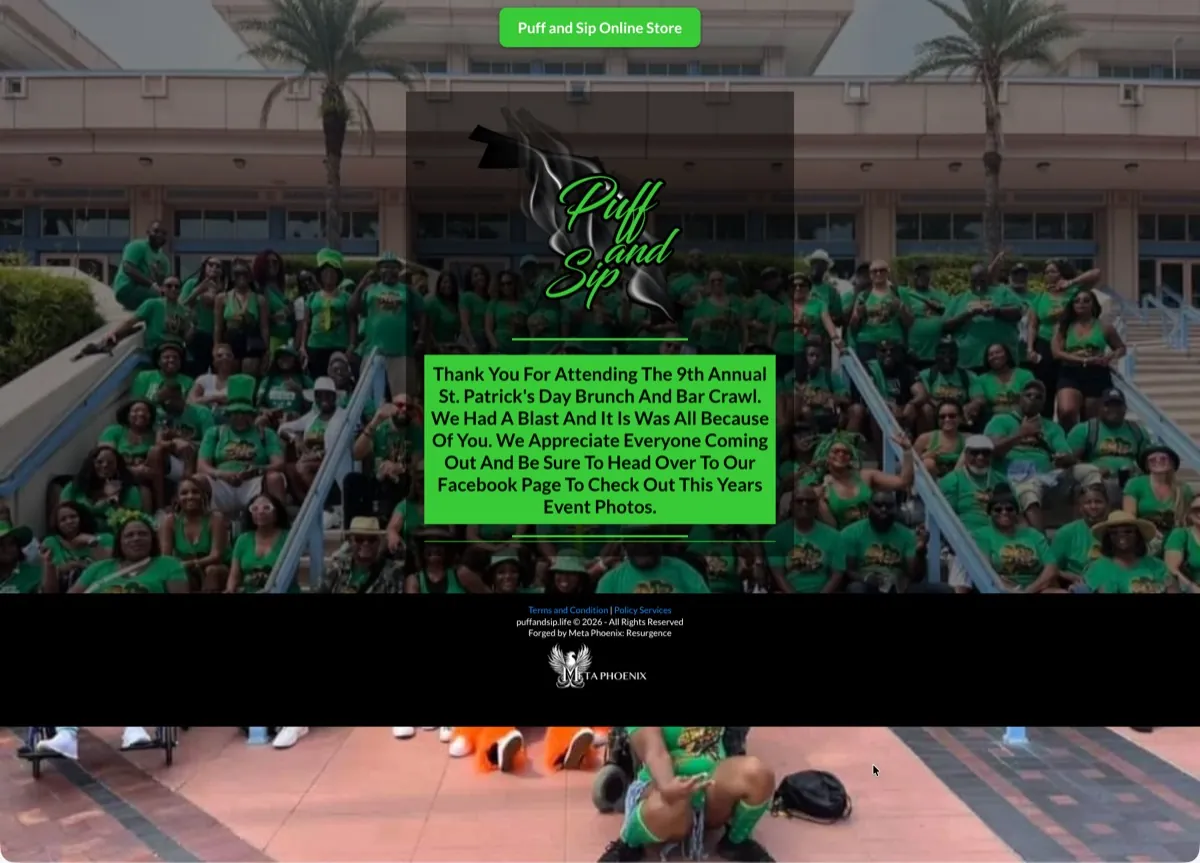
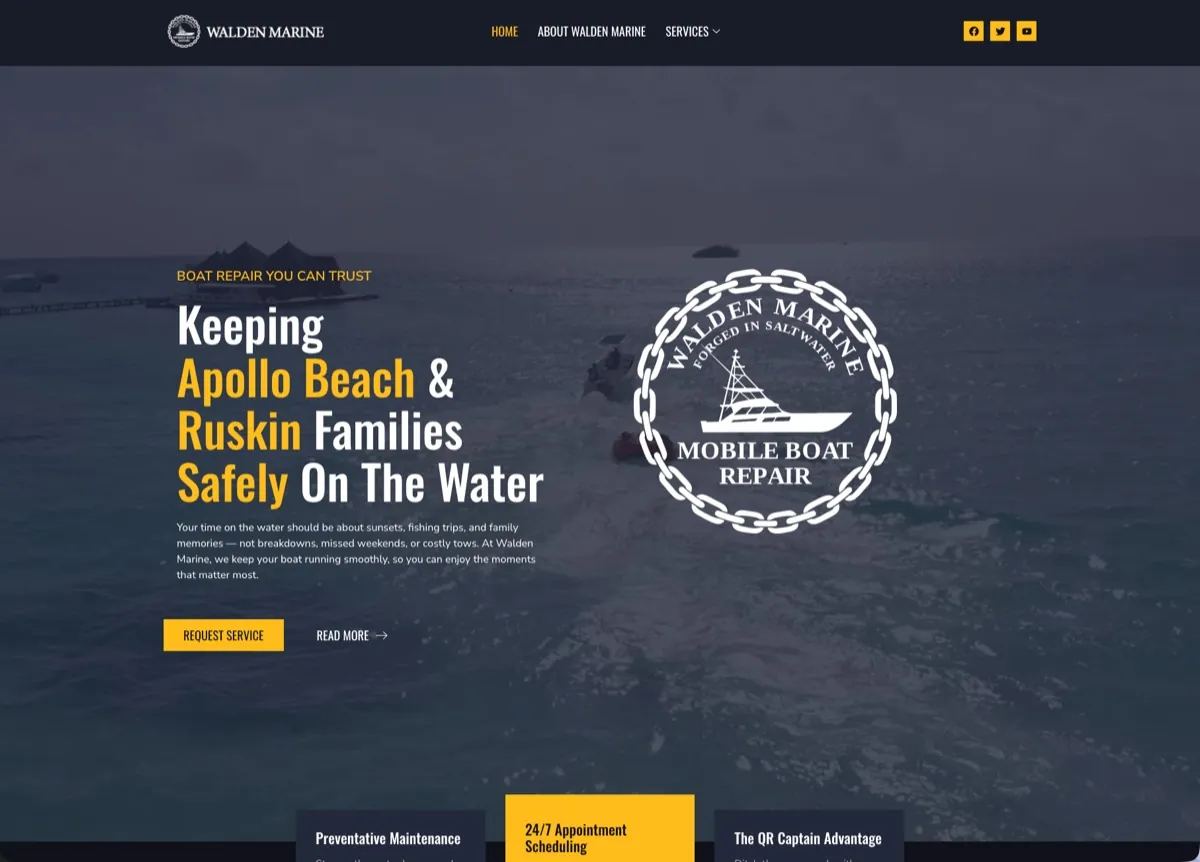
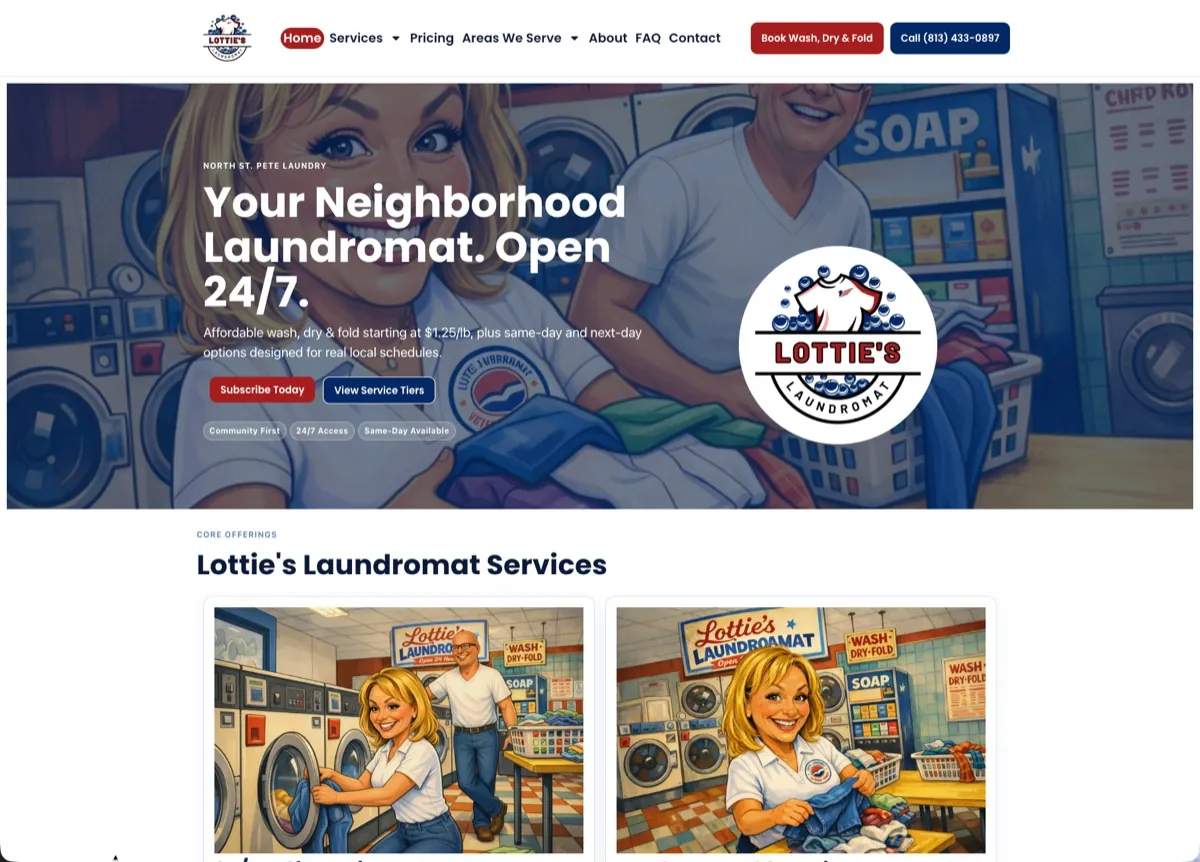
These are not tech companies with dedicated marketing departments. They are owner-operated small businesses that used a structured framework to build automated systems that convert leads consistently.
The common thread across each journey is the same: they started with a structured digital presence, connected their lead capture to a CRM, activated automated follow-up sequences, and then refined those sequences over time with strategic oversight. You can explore the full growth journey case studies to see exactly how this progression plays out in practice.
Pricing: What It Costs to Maximize Your ROI with Automated Lead Nurturing Workflows
One of the barriers small businesses cite when delaying automation is cost uncertainty. The Phoenix Ascent Framework addresses this with transparent, stage-based pricing that ties investment directly to deliverables.
| Stage | Investment | What’s Included |
|---|---|---|
| Digital Launch (Build With You) | $1,500 | Website, lead capture, market strategy, base automation |
| Digital Launch (Build For You) | $2,500 to $3,000 | Full execution: site, profiles, templates, and automation |
| Launch Infrastructure | $3,500 to $8,000 | CRM setup, workflow integration, measurable feedback loop |
| Foundation Growth | $1,500/month | 90-day direction, weekly execution, system refinement |
| Growth Partner | $2,000/month+ | Strategic direction, dashboards, advanced automation, ongoing optimization |
The full investment breakdown by stage shows exactly what each tier delivers, making it straightforward to identify the right entry point for your current position.
If you are unsure which stage fits your business, the growth path assessment maps your current situation to the appropriate starting point without any pressure to commit before you’re ready.
How to Get Started: Schedule a Growth Assessment
The fastest way to identify where automated lead nurturing workflows will generate the highest ROI for your specific business is to start with a structured assessment, not a generic proposal.
A Growth Assessment identifies your current stage, the specific gaps in your lead capture and follow-up process, and the most direct path to building workflows that convert. It is a practical discovery session, not a sales pitch.
You can schedule your Growth Assessment here and walk away with a clear picture of exactly where automation will move the needle in your business.
If you are exploring how to scale a small business beyond what manual effort allows, understanding your current infrastructure gaps is the first and most important step.
Conclusion
The evidence in 2026 is clear: if you want to maximize your ROI with automated lead nurturing workflows, the answer is not a single tool or tactic. It is a structured system where your digital presence, lead capture, CRM, and nurture sequences all work together as one connected operation.
For a small business, automated lead nurturing is the most direct path to scaleable growth that does not require scaling your team at the same rate as your revenue. It responds faster, follows up more consistently, and converts more of the leads you are already generating.
The Phoenix Ascent Framework provides a proven, staged approach to building that system, with a growth partner who ensures your automation investment keeps delivering returns as your business grows. Start where you are, build what your business needs next, and let structured automation do the work that manual processes never could.
Frequently Asked Questions
Automated lead nurturing workflows maximize ROI by eliminating the time gap between a lead expressing interest and receiving a response, reducing the human labor required to maintain consistent follow-up, and improving conversion rates through personalized, behavior-triggered messaging. Each improvement compounds: faster response, better consistency, and higher conversion all reduce the cost per acquired customer while increasing revenue from the same lead volume.
The best automated lead nurturing workflow for a small business in 2026 combines an immediate response trigger, a 5 to 7 step email and SMS sequence segmented by lead behavior, and a clear conversion ask once a qualifying threshold is reached. The most effective setups integrate directly with a CRM so every touchpoint is tracked and no lead is ever lost to follow-up gaps.
A basic automated lead nurturing workflow can be live in days once your lead capture and CRM are connected. A fully integrated infrastructure build, including CRM setup, segmentation logic, and multi-channel sequences, typically takes 3 to 6 weeks depending on the complexity of your business and the number of lead sources you are working with.
Yes, and arguably more so than for high-volume businesses. When you have a smaller lead pool, every lead counts more, and a missed or delayed follow-up has a proportionally larger impact on your monthly revenue. Automated lead nurturing workflows ensure that every single lead receives a timely, consistent experience regardless of your team’s capacity on any given day.
A marketing agency typically manages specific channels or campaigns in isolation, whereas a growth partner takes responsibility for the entire system connecting your lead capture, automation, CRM, and strategy into a single operating framework. A growth partner’s goal is measurable, sustainable ROI growth, not campaign delivery. You can read more about what a growth partner actually does to understand the distinction in practice.
If you have no lead capture in place, Stage 1 (Digital Launch) is your starting point. If you have a website and some leads but no structured follow-up system, Stage 2 (Launch Infrastructure) is most relevant. If your systems are connected but not consistently performing, Stage 3 or 4 is where you need to focus. The growth path assessment maps your current situation to the right starting point precisely.
Automated lead nurturing workflows are designed to handle the top and middle of the funnel: capturing leads, responding immediately, qualifying through behavior, and delivering consistent follow-up. For many small businesses, this replaces what would otherwise require one or more full-time sales or admin roles. Complex, high-value deals still benefit from human involvement at the decision stage, but automation handles everything leading up to that point with greater consistency than any manual process.